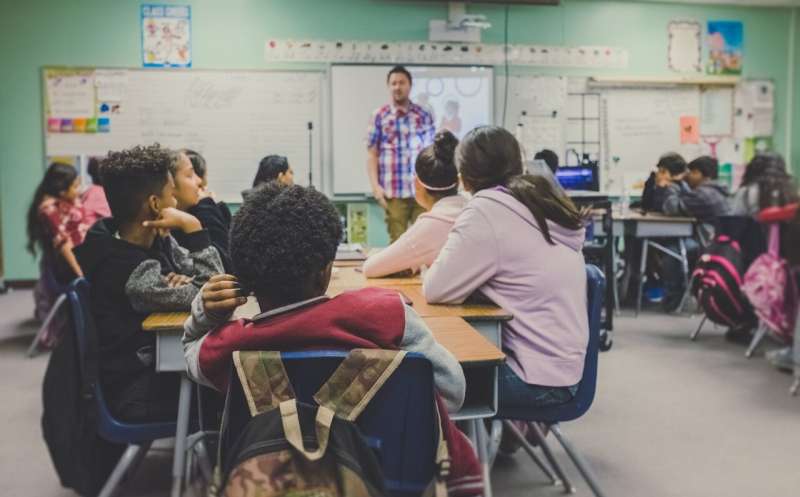
A study featuring more than 3,500 Compulsory Secondary Education (ESO) students and 294 teachers reveals that teachers' commitment to inclusive education favors their students' socio-emotional skills.
Socio-emotional competencies are the set of knowledge, skills and attitudes that favor the development of positive interpersonal relationships and an adequate management of emotions in various contexts. They are also associated with academic success, and are a protective factor against bullying and other antisocial behaviors.
a researcher at the University of Helsinki, wanted to "determine whether the inclusive education of teachers is related to their students' socio-emotional competences."
Inclusive education is a pedagogical approach based on all students' basic right to education, regardless of their personal, cultural, and social conditions, whenever they present some type of educational need. Inclusive education does not focus on minorities or specific groups of students. Rather, it is oriented towards the recognition of and comprehensive responses to all students and their different idiosyncrasies.
We asked teachers, through a questionnaire about inclusive education, what attitudes they have. It's important to know whether they think it's positive or not, how they implement it in the classroom, how the educational center is organized, and whether they organize themselves collectively with a view to inclusive education.

Cross-referencing this data with the level of students' socio-emotional competences in the dimensions of self-awareness, self-management and self-motivation, social awareness, prosocial behavior, and responsible decision-making, they reached a conclusion: there is a positive relationship between teachers being inclusive and students having socio-emotional competences. Read More
This article is referenced from
https://phys.org/news/
Views: 1.1k