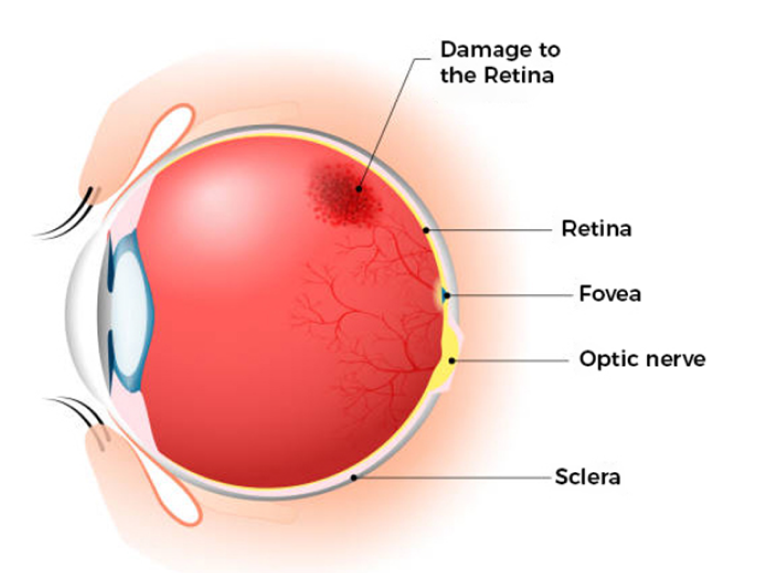

What Are Vitreo-Retinal Disorders?
Vitreo-retinal disorders are conditions that affect the vitreous (the clear gel filling the eye) and the retina (the light-sensitive layer at the back of the eye). The retina plays a vital role in vision by converting light into signals sent to the brain. Any damage to the vitreous or retina can seriously affect eyesight and, if untreated, may lead to permanent vision loss.
Common Vitreo-Retinal Disorders
Several conditions fall under vitreo-retinal diseases, including:
- Diabetic Retinopathy: Damage to retinal blood vessels due to diabetes
- Retinal Detachment: Separation of the retina from its supporting tissue
- Macular Degeneration: Degeneration of the central retina (macula)
- Macular Hole: A small break in the macula affecting central vision
- Vitreous Hemorrhage: Bleeding into the vitreous gel
- Epiretinal Membrane (Macular Pucker): Scar tissue forming on the retina
- Retinal Vein or Artery Occlusion: Blockage of retinal blood vessels
Causes and Risk Factors
Vitreo-retinal disorders may develop due to various factors, such as:
- Diabetes and high blood pressure
- Aging
- Eye injury or trauma
- Severe myopia (high power glasses)
- Eye infections or inflammation
- Family history of retinal diseases
- Previous eye surgeries
Symptoms to Watch For
Symptoms can vary depending on the condition but often include:
- Sudden or gradual loss of vision
- Blurred or distorted vision
- Flashes of light
- Floaters (dark spots or cobweb-like shadows)
- Dark curtain or shadow over vision
- Difficulty seeing fine details