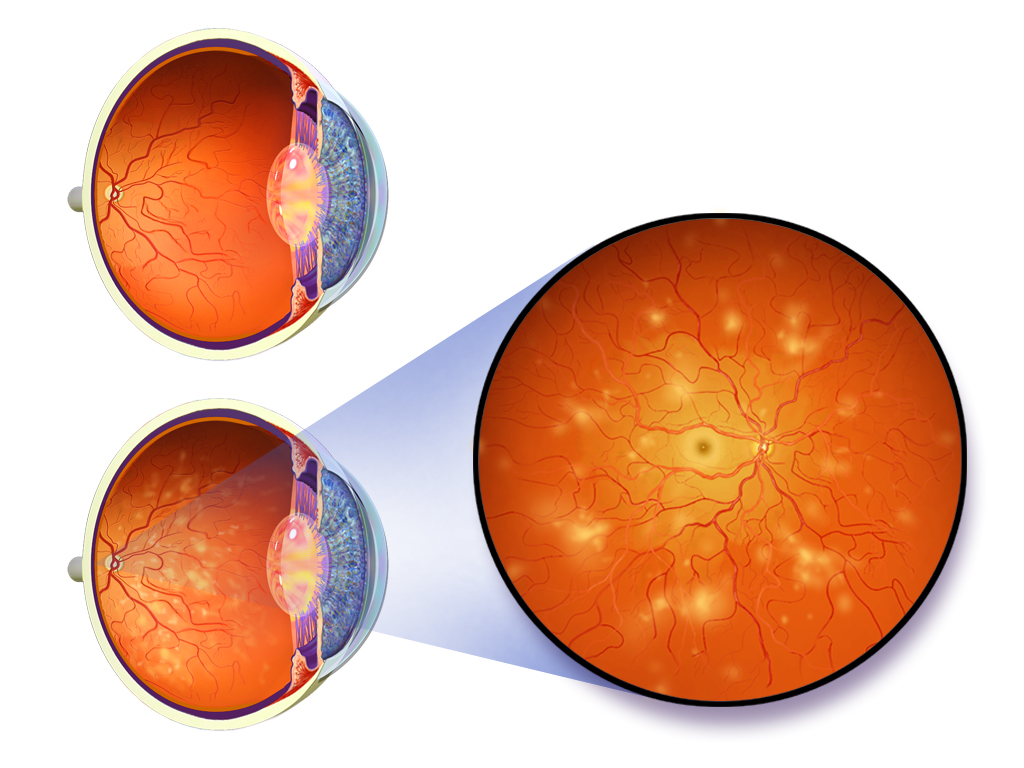

What Is Diabetic Retinopathy?
Diabetic retinopathy is a diabetes-related eye disease that affects the retina, the light-sensitive tissue at the back of the eye. It occurs when prolonged high blood sugar levels damage the small blood vessels of the retina, leading to vision problems and, in severe cases, permanent blindness. Diabetic retinopathy is one of the leading causes of vision loss among working-age adults, but early detection and treatment can prevent most vision loss.
Causes of Diabetic Retinopathy
The primary cause is uncontrolled or long-term diabetes. High blood sugar weakens retinal blood vessels, causing them to leak fluid or bleed. Over time, abnormal new blood vessels may grow, further damaging the retina.
Risk factors include:
- Long duration of diabetes
- Poor blood sugar control
- High blood pressure
- High cholesterol levels
- Pregnancy in diabetic women
- Smoking
Stages of Diabetic Retinopathy
Diabetic retinopathy develops in stages:
- Mild Non-Proliferative Retinopathy
Small bulges (microaneurysms) form in retinal blood vessels. - Moderate to Severe Non-Proliferative Retinopathy
Blood vessels become blocked, leading to reduced blood supply to the retina. - Proliferative Diabetic Retinopathy (PDR)
New, fragile blood vessels grow abnormally and may bleed into the vitreous, causing severe vision loss.
Symptoms of Diabetic Retinopathy
In the early stages, there may be no noticeable symptoms. As the disease progresses, symptoms may include:
- Blurred or fluctuating vision
- Dark spots or floaters
- Difficulty seeing at night
- Faded or distorted colors
- Sudden vision loss in advanced cases